
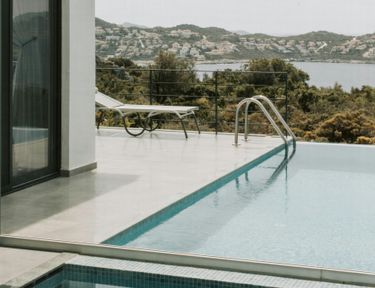
Smart Pool Care for Luxury Homes: Why Intelligent Cleaning Is the New Standard
Published by the CHASING Pool Care Editorial Team | Updated: March 2026
Owning a luxury pool is one of the most rewarding investments a homeowner can make, yet it is also one of the most demanding to maintain. Unlike standard residential pools, high-end pools come with custom finishes, irregular geometries, and premium surfaces that punish anything less than precision care. Yet far too many luxury homeowners are still relying on manual cleaning crews or basic random-navigation robots that were never designed for pools like theirs.
This guide breaks down exactly why luxury pools demand a smarter approach, where conventional cleaning methods fall short, and how AI-driven intelligent mapping is redefining what "clean" really means for high-end aquatic environments.
1. Why Luxury Pools Require Precision Maintenance: The Hidden Risks of Overlooking Detail Cleaning
A luxury pool is not simply a larger version of a backyard splash pool. It is an engineered water feature with layered complexity: hand-set mosaic tiles, polished stone coping, custom-blended plaster finishes, and water chemistry calibrated to protect all of it. Every one of these elements is sensitive to the kind of neglect that a standard pool might shrug off.
The Compounding Cost of Missed Spots
Pool professionals consistently identify corner buildup, grout-line algae, and waterline calcium deposits as the most common sources of long-term damage in luxury pools. These are not cosmetic issues. They are chemical and structural ones. Algae embedded in tile grout produces organic acids that gradually erode the grout itself. Calcium scaling on infinity-edge weir walls accelerates the micro-cracking of stone surfaces. And because luxury pools typically hold larger water volumes with more complex circulation zones, contamination in one dead-spot area can spread and destabilize water chemistry across the entire system.
The financial exposure is significant. Refinishing a custom-tiled luxury pool floor can cost anywhere from $15,000 to $80,000 depending on the tile and surface area. Replacing a damaged infinity-edge spillway is a full construction project. By contrast, the investment in a luxury pool cleaning system capable of reaching every corner and crevice with consistent, systematic coverage is a fraction of those remediation costs.
Precision Is Not Optional. It Is Protective
"Precision maintenance" means more than just coverage. It means the right agitation force on the right surface, at the right frequency. Delicate handmade tiles and polished quartz plaster require gentle but thorough cleaning that will not scratch or abrade. High-end pool maintenance therefore demands equipment with calibrated brush pressure, intelligent surface detection, and the ability to adapt its behavior to different zones within the same pool.
This is where most cleaning solutions, including premium manual services, struggle to deliver consistency. Human crews introduce variability on every visit. A robot without mapping intelligence simply cannot know what it has cleaned and what it has missed.
2. Why Irregular Shapes, Infinity Edges, and Custom Tiles Make Luxury Pools More Difficult to Clean
The defining features of luxury pool design are precisely what make them hardest to keep clean. Understanding the specific challenges these design elements create is the first step toward choosing the right robotic pool cleaner for infinity pools and complex aquatic environments.
Irregular Shapes Create Navigation Dead Zones
Standard pool robots are engineered around the assumption of a rectangular or simple oval pool. Their movement algorithms, typically wall-bounce random navigation, are optimized for flat runs along straight walls. The moment they encounter a curved wall, a kidney-shaped floor plan, a protruding sunken lounge shelf, or an asymmetric freeform outline, their coverage logic collapses.
The robot may repeatedly clean the same central areas while entirely skipping the curved perimeters, the tight radius corners, and the narrow connecting channels between pool zones. In a rectangular pool, this missed coverage may represent 5–10% of the surface. In a freeform luxury pool with multiple irregular lobes and recesses, uncleaned zones can account for 30% or more of the total surface area. These are precisely the zones where debris and algae concentrate.
Infinity Edges Demand a Different Kind of Diligence
An infinity edge (also called a vanishing edge or negative edge) creates one of the most visually spectacular effects in pool design. It also creates one of the most maintenance-intensive surfaces in any high-end pool maintenance regimen.
The weir wall over which water spills is constantly exposed to minerals, sunscreen residue, body oils, and airborne contaminants carried by the sheet of flowing water. The catch basin below the edge accumulates debris at a much higher rate than the main pool. And the transition zone between the main pool floor and the infinity edge drop requires a robot that can navigate to the edge safely and clean it thoroughly, without tumbling over.
Most random-navigation robots avoid this zone entirely, either by design (edge-detection safety stops) or by the sheer probability of a chaotic movement pattern that rarely reaches the perimeter consistently.
Custom Tiles Are Unforgiving of the Wrong Cleaning Approach
Hand-set glass mosaic tiles, imported travertine, and custom ceramic finishes represent some of the most expensive surfaces in luxury construction. They are also among the most sensitive. Abrasive brushes or excessive suction pressure, which are common in robots designed for plaster pools, can chip grout, crack glass tiles, or leave surface hazing on polished stone.
A proper smart pool cleaner for luxury homes must be able to modulate its cleaning behavior based on surface type, ensuring that delicate tile fields receive gentle, non-abrasive treatment while rougher plaster or pebble-finish areas receive the deeper agitation they need.
3. Why Random-Navigation Pool Robots Fail to Meet High-End Pool Cleaning Standards
The majority of robotic pool cleaners on the market, including many positioned as "premium" products, rely on random or pseudo-random navigation. This means the robot moves in straight lines until it hits a wall or obstacle, then changes direction based on a simple algorithm. It is an approach that works tolerably in simple rectangular pools, but it is fundamentally inadequate for luxury aquatic environments.
The Mathematics of Randomness
Random navigation is statistically inefficient. Because the robot's path is not informed by a map of what has already been cleaned, it will inevitably re-clean certain areas multiple times while leaving others untouched. The longer the robot runs, the better the statistical coverage becomes, but even after extended cycles, there is no guarantee that specific corners, curved walls, or step structures have been reached.
Studies of random-navigation robot coverage in freeform pools consistently show that 20–35% of the pool surface receives inadequate cleaning in a standard cycle. For a luxury homeowner paying for premium finishes and premium water quality, that failure rate is unacceptable.
Random Navigation Cannot Prioritize High-Risk Zones
An intelligent AI pool cleaning robot knows that the waterline, the steps, the corners, and the areas beneath water features are higher-accumulation zones that require priority attention. A random-navigation robot has no such awareness. It treats a clean open-floor section the same as a debris-laden corner shelf, because it cannot tell the difference.
This means high-risk zones are cleaned only when chance brings the robot there, rather than by design. In a luxury pool environment where a single season of neglected corner buildup can require professional remediation, leaving cleaning priority to chance is a meaningful financial and aesthetic risk.
Speed Is Not the Same as Thoroughness
Many robot manufacturers market cleaning speed as a proxy for quality. A robot that claims to clean a pool in 90 minutes sounds impressive, until you examine what percentage of that pool it actually reached. Without a verified coverage map, a fast robot and a thorough robot are indistinguishable from the outside. The difference only becomes visible when you start finding algae in the corners or calcium deposits along the infinity-edge weir.
High-end pool cleaning standards are not defined by cycle time. They are defined by verified, consistent, whole-pool coverage — every session, without exception.
4. How Intelligent Mapping Eliminates Missed Spots and Ensures Consistent Full-Pool Coverage
The answer to the limitations of random navigation is not a faster random robot. It is a fundamentally different approach to navigation, one built on real-time spatial mapping, AI-driven path planning, and session-to-session learning. This is the technology at the heart of the CHASING L1 Ultra, and it represents a genuine paradigm shift in how luxury pools can be maintained.
How AI Vision Mapping Works
The CHASING L1 Ultra uses an advanced AI vision system to construct a real-time map of the pool's geometry during its first operational pass. It identifies the pool's boundaries, internal features (steps, ledges, benches, recesses), surface zones, and the spatial relationships between them. This map becomes the foundation for a systematic, non-redundant cleaning path that is specific to your pool's unique shape, not a generic algorithm applied regardless of geometry.
This AI vision pool cleaner technology means that every session is planned, not improvised. The robot knows where it has been, where it needs to go, and how to get there efficiently. There are no statistical dead zones. There are no re-cleaned areas. There is a defined start, a methodical progression, and a verifiable end state: every accessible surface cleaned.
Systematic Coverage of Complex Geometries
For luxury pools with irregular shapes, sunken lounges, curved walls, and multi-level floor plans, the L1 Ultra's mapping capability is transformative. Instead of bouncing randomly and hoping to reach the curved perimeters, the robot's path is computed to follow the pool's actual geometry, navigating around curves, into recesses, along the full perimeter of freeform outlines, and up onto step structures.
This is what makes the CHASING L1 Ultra a genuine robotic pool cleaner for infinity pools and luxury environments: it does not just clean the easy parts of your pool. It systematically addresses the architecturally complex parts that random robots miss.
Consistent Results, Every Cycle
Perhaps the most undervalued benefit of intelligent mapping for luxury homeowners is consistency. When you run the L1 Ultra today and again in two weeks, it follows the same verified path, achieving the same coverage. There is no variability based on which technician shows up, how long they stay, or what a random algorithm happened to do that cycle.
For a homeowner who has invested in a luxury aquatic environment and wants to protect that investment reliably, consistency is not a luxury. It is the baseline expectation. Intelligent mapping delivers it.
Protecting Premium Surfaces with Adaptive Cleaning
Beyond navigation, the L1 Ultra's AI system enables surface-adaptive cleaning behavior. It modulates brush speed and suction pressure based on the surface type it is operating on, ensuring that glass mosaic tiles receive gentle treatment while plaster or aggregate finishes receive deeper agitation. This surface intelligence is what separates a true intelligent swimming pool cleaner from a robot that simply moves faster.
The CHASING L1 Ultra: Purpose-Built for Luxury Pool Environments
The CHASING L1 Ultra was engineered specifically for the demands of high-end residential and commercial aquatic environments. Its core design philosophy reflects a single conviction: that a luxury pool deserves a cleaning system that matches its complexity.
Key capabilities include:
- AI Vision Mapping System — Real-time pool geometry mapping for systematic, whole-pool coverage on every cycle
- Intelligent Path Planning — Non-redundant coverage algorithm that eliminates dead zones in irregular and freeform pool shapes
- Infinity Edge Navigation — Precision perimeter management that safely and thoroughly cleans along vanishing-edge walls and weir surfaces
- Surface-Adaptive Brushing — Variable brush pressure and suction calibrated for delicate tiles, polished stone, and premium plaster finishes
- Obstacle Recognition — AI-powered detection of in-pool features, furniture, and equipment to navigate around without interruption
- Remote Monitoring and Control — Full session visibility via the CHASING app, including coverage maps, cleaning history, and status reporting
Frequently Asked Questions
Can CHASING L1 Ultra clean freeform pools with non-standard shapes?
Yes. The AI mapping system is specifically designed to handle complex geometries, curved walls, irregular floor plans, and multi-zone pool layouts. The robot builds a map of your specific pool and navigates according to its actual shape.
Is CHASING L1 Ultra safe for pools with custom tiles and delicate finishes?
The L1 Ultra features adaptive brush pressure calibrated for sensitive surfaces, including glass mosaic tiles, travertine, and polished plaster. It is designed to clean thoroughly without abrasion.
How does CHASING L1 Ultra handle infinity edges?
The robot's navigation system includes precision perimeter management that allows it to clean along infinity-edge weir walls safely and systematically, addressing one of the most commonly neglected surfaces in luxury pool maintenance.
Does it work as a standalone system or does it require professional installation?
The CHASING L1 Ultra is a standalone robotic system designed for straightforward deployment. It does not require permanent installation or professional setup. Full operational guidance is provided in the onboarding documentation.
Conclusion: Intelligent Cleaning Is the Foundation of Luxury Pool Cleaning
The luxury pool ownership experience should be defined by enjoyment, not anxiety about maintenance gaps, missed spots, or surface damage from inconsistent care. But achieving that experience requires moving beyond the cleaning approaches designed for average pools.
Random navigation robots, however capable they may appear in marketing materials, are structurally unable to meet the precision demands of freeform geometries, infinity edges, custom tile fields, and high-standard water quality expectations. They leave gaps — not because they malfunction, but because they were not designed for environments like yours.
Intelligent mapping, AI vision navigation, and surface-adaptive cleaning are not incremental upgrades. They represent a categorical shift in what a luxury pool cleaning system can deliver. The CHASING L1 Ultra is built on that shift — and for homeowners who have invested in exceptional aquatic environments, it is the standard that matches the investment.
Explore the CHASING L1 Ultra luxury pool vacuum at chasingcleaner.com and discover what precision-engineered intelligent pool cleaning looks like in your home.